Genetics=DNA (aka, genome)
human genome= the hypothesis was, that we have at least 100,000 genes. When in actuality we have <18,000 style="font-weight: bold;">gene= DNA sequence producing a protein. that extra "junk" DNA is a regulation/information to the construction of an eventual homosapien.
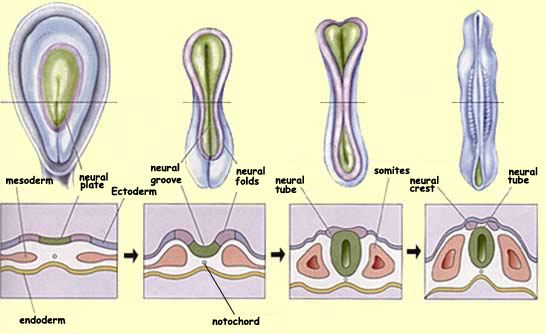
Zygote is consisted of three layers
- *ectoderm-> nervous system and tissues
- mesoderm -> structure of bodies and urogenital
- endoderm -> most organs including GI lumen (all the organs involved in the passing of food from mouth to rectum)

neural tube-becomes ventricals and central canal of spinal cord. During its "building" process, it begins to fold over, then merges to create the ventrical. Within the CNS it further differentiates into the determination of the cell type. (see image here)
The SIX steps to becoming a human:
- Continues mitosis and differentiate (a slow change) neurons and glia- cells are produced along the midline (proximal) and proceeds laterally (distal) as they mature and change membrane markers (proteins or glycoproteins)
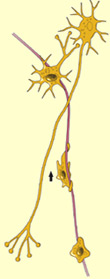
- Migration of neuroblasts to proper location (see image here)- migration is navigated by radial glia which form a sphere with spoke-like structure.
- Further differentiation into neuronal types- differentiation is produced by the presence of substances within the environment. Referred to as hormone soluble substances that effects gene transcription, may be either protein or molecules made by protein (e.g. steroids). Differentiation occurs within the cortex from inside-out, the outer cells are the most different.
- Formation and strengthening of connectivity- axons and dendrites increase in connectivity (occurs by growth), sometimes groups of axons get together in fasciculation (a bundle of nerve fibers, myelinated or unmyelinated).
- Rearrangements of neural connectivity- form a synapse=> organ(muscles) or neuron. Maintaining and developing a synapse that requires activation- grouping of receptor proteins. during activity and maturation the target cell will release substances that maintain the axon and dendritic (I know that's not a word...) connections.*Nerve Growth Factor (NGF)
- Apoptosis (a programed and necessary cell death where the inaction of apoptosis to a cell causes cancer within that cell) and further rearrangement of neuronal connections. If a connection is lost the neuron may die, it is also possible to jsut lose that one connection (like pruning)
*words to know
mitosis in this case is used to explain the non basic (two cells into four cells into eight...) but that the cells travel upon replication and from there replicate while traveling or reaching destination. i.e. the mitosis of a brain cell that continues to build the rest of the brain within the development of the zygote, does not restrict to the brain!
 SEE YOU NEXT CLASS!


woohoo i did it!
ReplyDelete